
Kitchen Remodeling in Murfreesboro
A kitchen built around your life
A Murfreesboro kitchen takes more abuse than any room in a Middle Tennessee house: every meal, every spill, every dinner party, every science project, every pancake breakfast. Designing one to handle twenty years of that workload means cabinetry, surfaces, and appliances chosen to wear well rather than photograph well on day one.
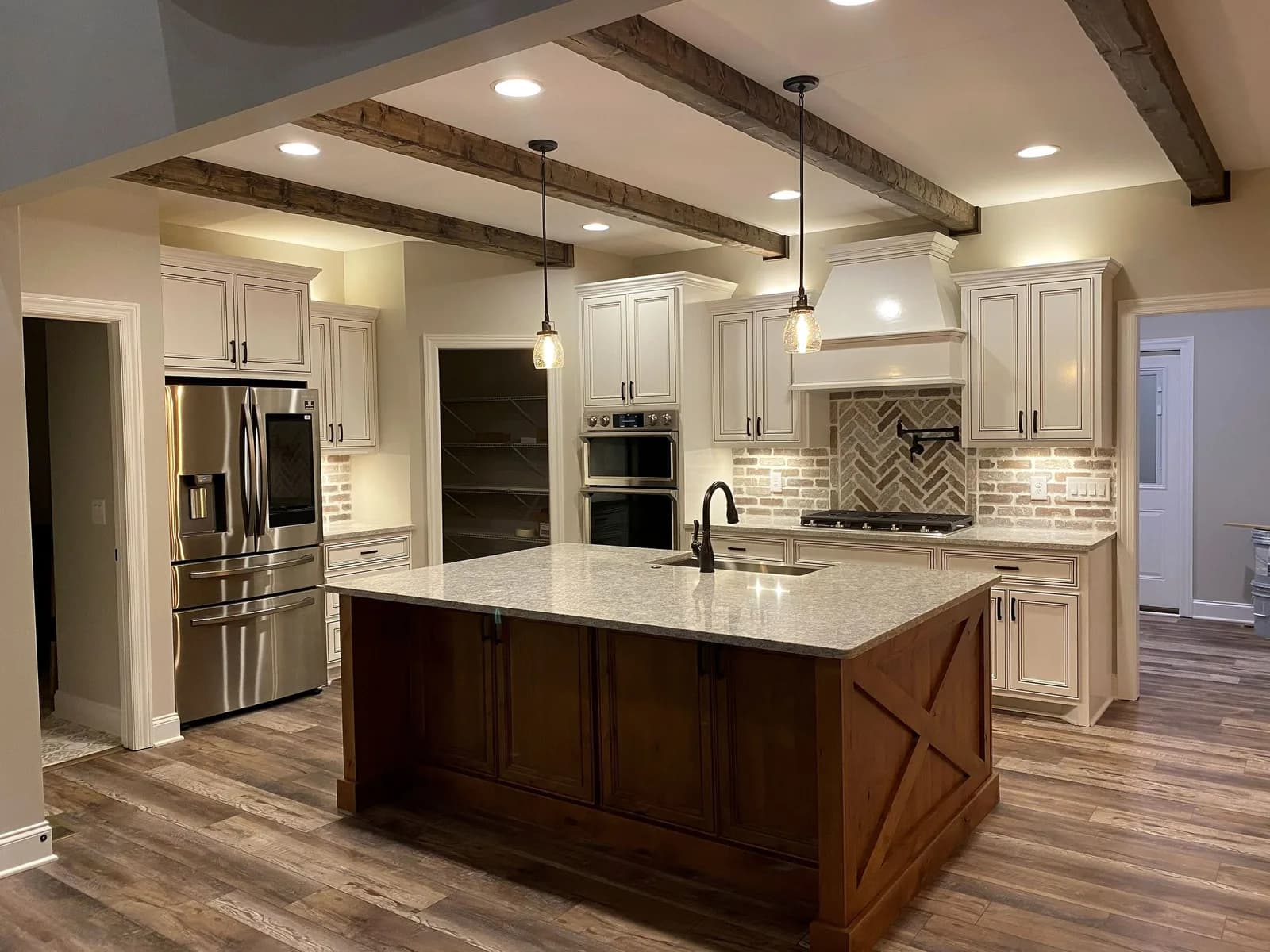
Cabinetry choices that outlast the warranty card
Cabinetry is the largest line item in most kitchen remodels and the easiest place to be misled by glossy showroom displays. We specify box construction with three-quarter-inch plywood ends and backs, dovetailed solid-wood drawer boxes, full-extension undermount soft-close hardware rated for at least 75 pounds of dynamic load, and concealed six-way-adjustable European hinges so a sagging door becomes a five-minute fix instead of a re-hang. Door style is taste; box construction is engineering, and that is where we hold the spec line.
Painted cabinetry shows finger wear at high-touch corners (knobs, edges, base-cabinet toe kicks), and the paint system matters more than the color. We use catalyzed conversion-varnish topcoats over fully-sanded primer for any painted cabinet because lacquer alternatives yellow under fluorescent under-cabinet light and acrylic latex alternatives chip at the edge band.
Stained cabinetry is more forgiving but requires sealed end-grain on every drawer face to keep moisture from raising the grain near the dishwasher. Owners sometimes push for an inexpensive cabinetry brand to redirect dollars to appliances; we caution against that trade-off because failed cabinetry surfaces years after the appliance has been replaced, and the appliance is the cheaper line to upgrade later. The cabinet shop drawings get a careful review during the design phase (every interior dimension, every drawer height, every shelf adjustability point) because cabinetry that fits poorly is a constant daily annoyance even if the doors are pretty.
Counter materials, range hoods, and the workhorse decisions
Counter material is the second-biggest taste-versus-function decision. Quartz engineered slabs offer the most consistent appearance and the lowest maintenance profile: non-porous, stain-resistant, no sealing required, factory-grade hardness, and a 25-year manufacturer warranty common across brands. Quartzite (a natural stone, often confused with quartz) reads more luxurious, handles heat better, but requires periodic sealing and shows etching from acidic spills when the owner skips that sealing rhythm. Granite still has a place for owners who want the natural pattern variation, with the same sealing caveat.
Solid-surface acrylics like Corian have repair-by-sanding advantages but show wear at the sink rim faster than stone. Soapstone darkens with age and oil treatments that some owners love and others find inconsistent. Range hood capture geometry matters more than wall versus chimney style.
The hood needs to overhang the burner zone by at least three inches on every exposed side and deliver enough cubic-feet-per-minute extraction to clear smoke before it gets to the smoke detector hallway. Induction versus gas is a preference call once the cooktop venting and electrical capacity is right; both perform well when the surrounding cabinetry, exhaust, and counter clearances are detailed to the manufacturer specifications. We size hood CFM to the cooktop BTU output the owner picked, not to a marketing claim. Backsplash material runs from subway tile to slab counter-material extensions; we map the choice to the splash zone the cooktop generates and whether the owner wants to repaint the wall behind the toaster or wipe down a sealed surface.
Layout patterns that work for families
Layouts that survive family life share a small set of properties. The work triangle (sink, refrigerator, cooktop) keeps total walking distance between the three under 22 feet, an industry rule that holds up well in lived practice. The prep zone (the counter between sink and cooktop) measures at least 36 inches of clear linear surface, not interrupted by the toaster oven the owner forgot to budget counter space for. The dishwasher lands within one cabinet width of the sink so dirty dishes get rinsed and loaded without traveling.
Drawer banks replace lower-door cabinets for any base run holding pots and pans; bending and reaching into a base cabinet to extract a 12-quart stockpot is the daily friction owners regret most. The island, if there is one, sits at least 48 inches from any opposing counter run so two adults can pass each other without dance moves. Bar seating on the island leaves 24 inches of knee depth and 24 inches of width per stool.
Pendant lighting hangs 30 to 36 inches above the counter, biased toward the higher end on a tall island. These rules are not invention; they accumulated from decades of post-occupancy feedback across thousands of kitchens, and we apply them by default unless the owner has a specific reason to deviate. The deviation conversation is welcome. Owners who entertain on weekends, owners who teach cooking at home, owners with mobility considerations all benefit from kitchen layouts tuned to their reality rather than the default rule book.
Schedule and disruption planning for a kitchen-remodel scope
A whole-kitchen remodel runs 8 to 14 weeks from demo start to final inspection, depending on whether plumbing or electrical relocate, whether the island moves, and whether any wall structure changes. Owners cannot use the kitchen during the work; there is no half-stage. We help the owner set up a temporary kitchen elsewhere in the house: a folding table with a microwave, an electric kettle, a slow cooker, and an induction hot plate covers most family cooking for the duration. Refrigerator gets relocated to the garage or basement during the work and runs on a temporary 20-amp circuit. Dishwashing routes to the laundry tub or a guest bathroom.
The disruption is real and we encourage owners to plan ahead. A stack of disposable plates and a meal-delivery subscription credit make the 10-week window easier on the family rhythm. Demo phase runs about a week. Rough mechanical, electrical, and plumbing run two to three weeks. Cabinet install runs three to five days once the cabinets arrive (lead time is the biggest schedule variable, often four to ten weeks from order). Counter template, fabrication, and install runs two to three weeks.
Tile backsplash runs three to five days. Final electrical, plumbing, and trim runs about a week. Punch list and inspection follow. We hand the kitchen back ready to cook on. Owners get an appliance walk-through with operating instructions and warranty registration support for every major piece of equipment.
Written by Daniel Jernigan
Daniel founded Tennessee Home Builders in 2021 and leads custom home design and build across Middle Tennessee.
Frequently asked questions
Often we keep the layout and replace cabinetry, counters, and appliances within the existing footprint. That is the fastest path and the lowest-risk budget. Moving plumbing or electrical adds about two weeks plus a meaningful labor line; moving a wall adds engineering review plus another two to four weeks on top. We price both paths so the owner sees the trade-off before signing.
Plan for 8 to 14 weeks of kitchen unavailability. A temporary kitchen elsewhere in the house (microwave, induction hot plate, slow cooker, electric kettle, folding table) covers most family cooking. We coordinate refrigerator relocation to the garage on a temporary circuit so the daily food rhythm stays sane.
Quartz engineered slab for the lowest-maintenance, most stain-resistant choice: non-porous, no sealing required, 25-year warranty. Natural quartzite reads more luxurious but requires periodic sealing and care around acidic spills. The right choice depends on how forgiving the owner wants the surface to be and how they feel about natural variation in the slab.
Key Facts
- License
- TN Residential Contractor License # 77609
- Founded
- Designing Middle Tennessee kitchens for two decades of family-life durability since 2021.
- Projects
- 29+ completed projects across Middle Tennessee
- Service Area
- Murfreesboro headquarters serving 20 cities across 8 Middle Tennessee counties.
- Signature
- Twenty-year kitchens with cabinetry, surface, and layout choices vetted for daily abuse.
We serve homeowners across Middle Tennessee
From the office in Murfreesboro, we build, renovate, and improve homes in Murfreesboro, Christiana, Eagleville, Lebanon, Nolensville, Shelbyville, Smyrna, and Woodbury.
Explore our other services
Ready to start your kitchen remodel?
Tell us about your site, your timeline, and what you have in mind. We’ll come back within 24 hours.