
Bathroom Remodeling in Murfreesboro
A bathroom worth slowing down in
A primary bath in Murfreesboro or across Middle Tennessee that ages slowly comes down to invisible waterproofing under the visible tile, vanity choices the partner sharing the sink approves on the third week of use, and a glass enclosure that does not become a streaked maintenance burden after the first month.
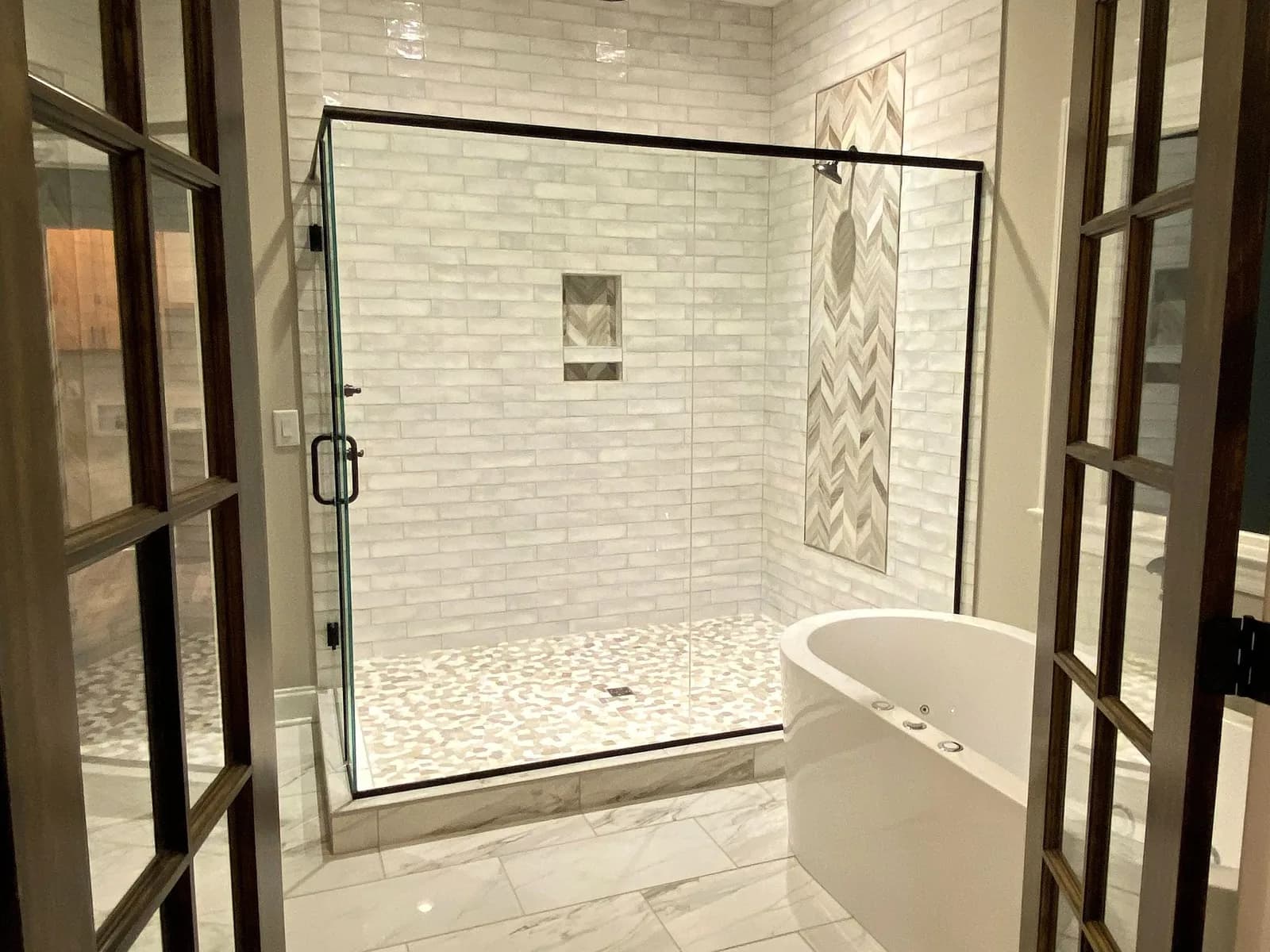
Waterproofing underneath the tile is the whole game
The single biggest difference between a bath that lasts twenty years and a bath that develops mold behind the curb at year three is the waterproofing system used under the tile. Old-school tar-paper-and-wire-lath shower pans still meet code in many jurisdictions but fail at the pan-to-curb transition far more often than modern membrane systems. For every wet area we tile, we default to Schluter Kerdi waterproofing: a polyethylene sheet membrane bonded to a cement backerboard substrate, with pre-fabricated curb pieces and a clamping-drain assembly that integrates the membrane into the drain flange.
The system carries a 10-year manufacturer warranty when installed correctly, and we pass that documentation through to the owner at closeout alongside our own one-year builder warranty on the installation labor. Equivalent systems from Wedi (foam-board waterproofing) and Laticrete Hydro Ban (liquid-applied membrane) work as well for owners who have a vendor preference; the hard line is that traditional pan systems are not used. The owner cannot see the waterproofing system once tile is set, which is why it matters so much to get right the first time.
The invisible failure mode is the one that surfaces years later as bubbled paint on the floor below or mildew streaks in the ceiling drywall. The Schluter installation gets a flood test before tile sets: 24 hours of standing water against the membrane to confirm the curb seal, the drain integration, and the wall-to-floor joints hold. That test is non-negotiable on every wet space we build.
Vanity, mirror, and sink choices for daily use
Vanity height has migrated upward over the last decade, from the old 30-inch standard to a comfort height of 36 inches matching kitchen counter height. The change makes a noticeable difference for taller adults. Two-sink vanity layouts work in baths wider than 60 inches but become awkward below that; a single wide undermount sink with deep counter space on both sides often serves a couple better than two cramped sinks. Mirror sizing follows the vanity: framed mirrors that span 80 to 90 percent of the vanity width read intentional, while small medicine-cabinet mirrors centered over each sink feel apartment-grade.
Faucet finish needs to coordinate with the door hardware throughout the house. Mixing brushed nickel in the bath with oil-rubbed bronze in the bedroom hallway reads inconsistent. Drawer banks beat door cabinets in vanity construction because hair tools, toothbrush chargers, and skincare bottles do not stack vertically. Soft-close hardware is non-negotiable; the slam-shut drawer in a 6 a.m. shared bathroom is the smallest possible quality-of-life upgrade and we include it on every vanity by default.
Lighting needs to come from above and from the sides. A single overhead fixture casts under-eye shadows that age the face in the mirror; sconces flanking the mirror restore even illumination. Color-temperature choice matters too: 2700K to 3000K reads warm and flattering, 4000K reads clinical and harsh. We coordinate with the owner whether daily routines want warm-bath lighting or task-bright makeup-application lighting.
Glass enclosures and the maintenance reality
Glass shower enclosures are a magnet for hard-water spotting in Middle Tennessee, where municipal water sits at moderate hardness and well water can run far harder. We specify treated glass (a factory-applied hydrophobic coating like ShowerGuard, Diamon-Fusion, or EnduroShield) because untreated glass requires squeegeeing after every shower and most households stop doing that within six months of move-in. Treated glass shows water beading rather than sheeting and pushes the next squeegee to weekly rather than daily.
The other glass choice is frameless versus framed: frameless looks cleaner but requires thicker glass (10mm versus 6mm), heavier-duty hinges, and more careful installation to prevent leak paths at the panel-to-tile transition. Framed enclosures are more forgiving on out-of-plumb walls, which exist in nearly every existing bathroom, and cost less than frameless on a square-foot basis.
Owners who plan to age in the home twenty more years and entertain rarely choose frameless; owners with younger kids or guest-bath scopes choose framed and put the savings into tile or counters. Sliding glass doors are a separate species: they ride on tracks that collect everything and become a long-term maintenance frustration, and we recommend them only when the bathroom footprint will not accept a swinging door. Pivot doors at heavier glass weights require reinforced jamb framing during the remodel so the hinge load transfers to structure rather than to drywall; we detail this during framing rather than discovering it during glass installation.
Accessibility and curbless options for aging in place
Owners planning to stay in the home through aging years deserve a frank conversation about curbless showers, grab-bar blocking, comfort-height toilets, and clear floor space at the vanity. The curbless shower (a flat shower floor with a linear drain and a sloped substrate beneath) eliminates the trip hazard of a 6-inch shower curb. Done well, it integrates into the bath floor tile without reading as a medical accommodation.
Done badly, it puddles water across the bath floor and aggravates the partner who showered second. We slope the shower-floor substrate at a minimum of a quarter-inch per foot toward a recessed linear drain along the back wall, run the waterproofing membrane up the wall sufficient inches above curb level to handle splash, and include a glass partial panel rather than a full door to keep water inside the wet zone. Grab-bar blocking gets installed during framing whether the owner wants visible bars on day one or not; in-wall blocking costs almost nothing while the wall is open and adds decades of flexibility later when an installed bar takes ten minutes instead of a wall demolition. Comfort-height toilets (17 to 19 inches versus the old 14 to 15) reduce daily stress on knees and hips.
None of these choices look institutional when designed with care; we have built primary baths that pass aging-in-place criteria and look like spa retreats. The accessibility conversation belongs in scoping, not retrofitted after framing closes. Owners regret skipping the conversation when the eventual need arrives ten or fifteen years later.
Written by Daniel Jernigan
Daniel founded Tennessee Home Builders in 2021 and leads custom home design and build across Middle Tennessee.
Frequently asked questions
Schluter Kerdi by default: sheet membrane on cement backerboard with a clamping drain. Equivalent Wedi or Laticrete systems work when owners have a vendor preference. Traditional tar-paper-and-wire-lath pan systems are not used regardless of code permission, because they fail at the curb transition far more often than modern membrane systems.
If you plan to age in the home, yes. Curbless eliminates a trip hazard and reads spa-grade when executed with proper drain slope and waterproofing membrane height. We install grab-bar blocking during framing on every primary bath whether the owner wants visible bars on day one or not; the blocking costs nothing while the wall is open and adds decades of flexibility.
Six to nine weeks for a typical primary bath with shower replacement, vanity replacement, tile floor, and freshened plumbing fixtures. Tile installation is the longest single line at two to three weeks; cabinet lead time is the biggest schedule variable, often six to ten weeks from order. We coordinate the cabinet order during the design phase so the cabinetry lands when the bath is ready for it.
Key Facts
- License
- TN Residential Contractor License # 77609
- Founded
- Building primary baths across Middle Tennessee since 2021 with waterproofing systems that outlast the warranty card.
- Projects
- 29+ completed projects across Middle Tennessee
- Service Area
- Murfreesboro shop dispatching across 20 cities and 8 Middle Tennessee counties.
- Signature
- Slow-aging primary baths anchored on Schluter waterproofing and treated glass.
We serve homeowners across Middle Tennessee
From the office in Murfreesboro, we build, renovate, and improve homes in Murfreesboro, Christiana, Eagleville, Lebanon, Nolensville, Shelbyville, Smyrna, and Woodbury.
Explore our other services
Ready to start your bathroom remodel?
Tell us about your site, your timeline, and what you have in mind. We’ll come back within 24 hours.