
Home Additions in Murfreesboro
More house, built to match
Adding a wing to an existing Murfreesboro or Middle Tennessee dwelling looks easy on paper and turns out to be the hardest carpentry on the calendar. New footings must mate to old footings, new rooflines must rake into old planes, and finished trim has to disguise the seam so visitors cannot tell where new starts and the existing house ends.
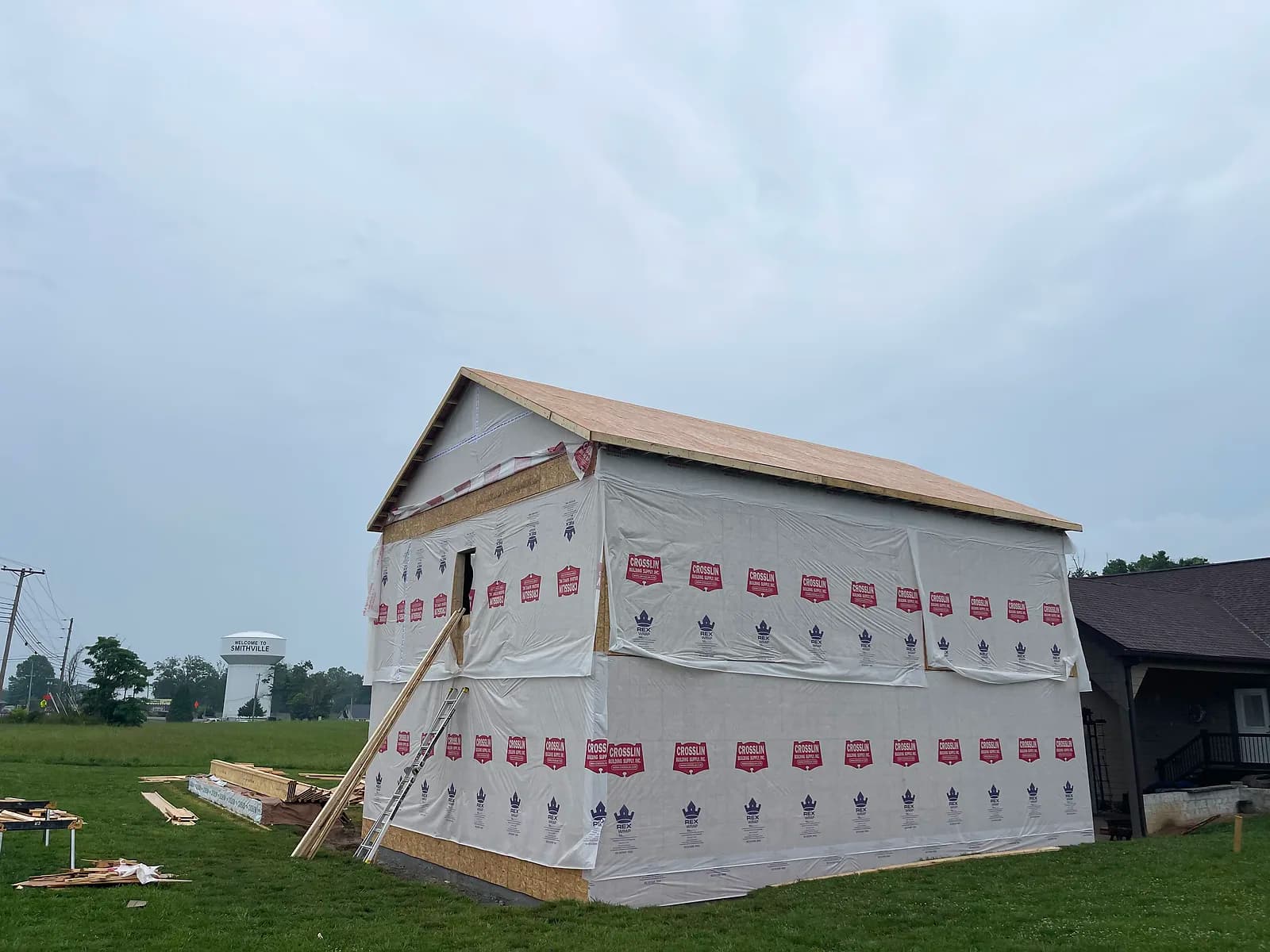
A closer look at our work
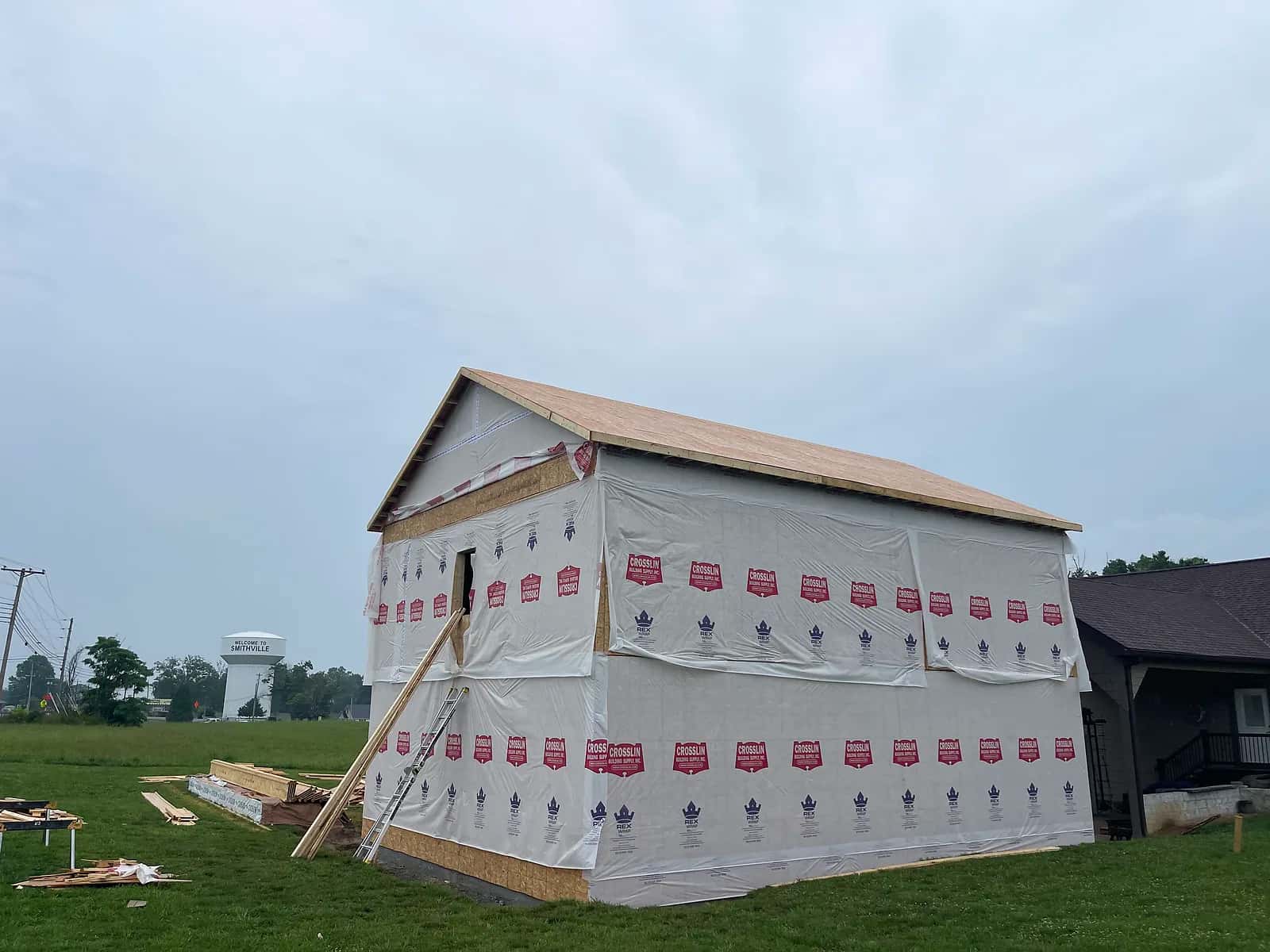
Designing additions that integrate with the existing roofline
Addition design begins with the roofline. A careful attachment makes the addition read as if it was always there, while a careless one turns a thoughtful expansion into a strapped-on shed. We measure rake angles, eave heights, fascia depth, soffit returns, and shingle exposure on the existing roof and replicate every one of those dimensions on the new section. Where the new roof attaches to the existing wall we build a proper cricket-and-flashing detail with step flashing tied into the existing siding, not a smear of caulk pretending to be a seam.
Existing roof penetrations near the attachment (bath vents, kitchen vents, furnace flues) get relocated rather than incorporated into the new framing. Window head heights match across the seam; mullion patterns repeat from old to new; trim casings step in the same widths and depths. The whole exercise is sympathetic detailing, not invention.
Owners who try to use an addition to introduce a competing architectural language usually regret it; the addition fights the house and the curb appeal degrades. We push back on stylistic juxtapositions and recommend choosing one architecture and following it. The result is curb appeal that reads as one coherent house, and a re-sale outcome that improves the listing photographs. We bring sketch overlays to the scoping table so the owner can see proposed wing volumes against the existing elevation before committing to a full architectural set.
Foundation work where new meets old
New foundation meeting old foundation is the most engineering-sensitive part of an addition. The existing foundation has settled into its position over decades; the new foundation will settle over its own timeline. Differential settlement at the connection point is what produces the diagonal cracks owners notice three years later. We mitigate differential settlement with proper footing depth: new footings dug to undisturbed soil below the frost line, drained with perimeter tile, and tied to the existing foundation with epoxied rebar dowels only where the structural engineer specifies.
Sometimes the right detail is full separation. The addition rides on its own independent footing system, the connecting wall flexes via a control joint detail, and the finished structure reads as one house but mechanically as two. The choice depends on soil conditions, existing foundation type, and addition load.
We do not guess. A structural engineer reviews the foundation interface for every addition we build, and the engineer's stamp lands on the permit drawings before any digging begins. Owners sometimes ask whether the engineer review can be skipped; the answer is no, because the difference between a properly engineered addition foundation and a guessed one shows up as cracks owners cannot ignore once the third winter arrives. We coordinate the geotechnical study, the engineer stamping, and the inspector pre-application meeting so the engineering documents land at permit submittal rather than chasing the schedule.
Permitting and code compliance for additions
Permits for additions are stricter than permits for renovations because additions change the building footprint, the square footage of record on the deed, the property tax basis, and the structural load path of the assembled dwelling. We pull a building permit, an electrical permit, a plumbing permit, and a mechanical permit on every addition. Energy code compliance applies to the new envelope assembly: the wall, ceiling, and floor of the addition must meet the same current IECC R-value targets a new build would face, even when the existing house lags.
That can create an insulation-mismatch the owner needs to understand. The addition will outperform the existing house, and the seam between old and new might require an additional air-sealing detail at the connection point. We coordinate the energy inspection, the framing inspection, the rough mechanical, electrical, and plumbing inspections, and the final inspections, then file the as-built drawing set with the county for the deed update. Owners receive a copy of the recorded as-built so the next property appraisal sees the addition correctly.
Skipping any of these steps risks a county post-construction enforcement action (fines, lien threats, or worst case a forced un-build of unpermitted work), and we have never built unpermitted square footage. That bar holds for every project we sign. The inspector relationships we have built over the years matter here: knowing how a given county inspector reads framing detail or wants step-flashing executed saves days when those details could otherwise loop back into the office for revisions.
Common addition scopes and what each one accomplishes
The four common scopes Middle Tennessee owners ask about are: primary-suite addition (master bedroom plus en-suite plus walk-in closet, typically 400-700 square feet, designed to age in place with no-step entry from the parking surface), kitchen-and-mudroom addition (often paired with a kitchen renovation in the existing footprint, adding a 200-300 square foot pantry and mudroom on the back), great-room addition (a full vaulted-ceiling family space added off the back of a 1990s or earlier house that originally had a small den), and second-story addition (the most engineering-intensive, requiring full structural analysis of the existing wall framing and foundation to confirm load capacity for a second story). Each scope has its own pricing pattern, schedule pattern, and risk pattern.
We discuss each option during scoping with the owner so they can see how their goal (more space, accessibility, resale value, family layout) maps to which scope. Owners sometimes start asking for a second-story addition and end up choosing a primary-suite addition on the ground floor because the cost differential favors ground-level expansion when the existing first floor has space for it.
The scoping ledger surfaces all four options and the owner picks; we do not steer toward whichever scope carries the biggest contract value. Owners thinking about resale sometimes start asking about the most expensive option and end up choosing the scope that improves daily life rather than the appraisal photo.
Written by Daniel Jernigan
Daniel founded Tennessee Home Builders in 2021 and leads custom home design and build across Middle Tennessee.
Frequently asked questions
Six to ten months for a typical primary-suite or kitchen-and-mudroom addition. Twelve to eighteen months for a second-story addition because the existing house gets temporarily structurally exposed during framing and the schedule includes weather contingencies. Engineering review and permitting add another six to eight weeks before construction starts.
Not if we do it right. Matching roof pitch, eave height, window head height, trim profiles, and siding pattern across the seam is the work that disguises the boundary. We push back hard against stylistic juxtaposition; an addition that fights the existing architecture degrades curb appeal regardless of how nice the new wing looks on its own.
Usually no, because the existing house stays sealed until the addition is dried in and ready for attachment. The attachment week (when we open the existing exterior wall to tie into the new framing) is dusty and noisy but bounded; we coordinate that week with the owner so it lands during a planned travel window or a Friday-to-Monday push when school schedules allow.
Key Facts
- License
- TN Residential Contractor License # 77609
- Founded
- Building additions that read as original Middle Tennessee architecture since 2021.
- Projects
- 29+ completed projects across Middle Tennessee
- Service Area
- 20 cities and 8 counties of Middle Tennessee on the addition map.
- Signature
- Footprint additions seam-matched to existing rooflines so the boundary disappears.
We serve homeowners across Middle Tennessee
From the office in Murfreesboro, we build, renovate, and improve homes in Murfreesboro, Christiana, Eagleville, Lebanon, Nolensville, Shelbyville, Smyrna, and Woodbury.
Explore our other services
Ready to start your addition?
Tell us about your site, your timeline, and what you have in mind. We’ll come back within 24 hours.